Posts

Showing posts with the label hummingbirds

Mexican hyssop

Image
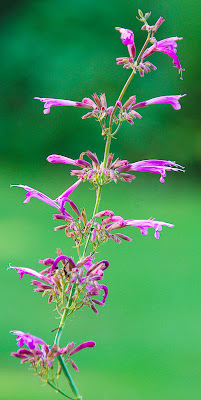
I'm quite fond of hyssops ( Agastache spp). Southwestern U.S. and Mexican natives, they include all sorts of delightful plants that are well-suited to our often droughty summers. Hummingbirds like to visit their flowers, and they're drought-tolerant, which first got me interested in them , but their variety of forms and flower shapes is equally entrancing. I planted Mexican hyssop ( Agastache mexicana ) in an oak half-barrel near the porch early in the summer. The hummingbirds have been enjoying it.

A hummingbird visit

Outside my office window today, I saw a female hummingbird hovering. She stayed quite a long time (at least for a hummingbird), moving around. I think she saw her reflection, and was wondering 'who the heck was that?' Ruby-throated hummingbirds are keenly defending their territories now, as they prepare to head south for the winter, and I suppose, wanting to load up on energy.

Hummingbird flowers and summer evenings

Image
I love this plant ( Begonia boliviensis ), even if it does trick hummingbirds into visiting it . It's succulent enough to weather our dry summer heat in a hanging basket, and robust enough to grow from quite a small internet-ordered sprig into this lovely specimen within 2 months or so. I tried to overwinter a plant inside a couple of winters ago, with no success (it got very cold in the house over winter break while we were gone that year, but perhaps we overwatered it, too). Last year, my mail-ordered (actually internet-ordered) dormant root/corm/whatever didn't emerge, much to my disappointment. But this year's plant is thriving. And, warm, sultry evenings have settled in here, although we're supposed to have a respite this weekend. The mid-July sky is lovely, even if it didn't produce a thundershower.

Hummingbird courtship

We've had a female hummingbird at our feeders and visiting Monarda and Lonicera flowers for some weeks. But eating lunch on the porch today, we were excited to see a pair of hummingbirds circle up and then down, and then disappear on the ground. Woo-hoo! Checking out All About Birds (Cornell Lab of Ornithology), Journey North , and Operation Ruby Throa t, it seems promising that this was the final courtship ritual prior to mating, so maybe we'll have a hummingbird nest & babies in the next few weeks. Here in the Southeast, we apparently can have double broods , so maybe our pair will be producing one of these!

A first hummingbird?

Image
I'm so jealous of my fellow butterfly (and wildlife) gardening enthusiasts and friends in Six Mile, SC. They've now seen two (!) male ruby-throated hummingbirds, one yesterday, and one today. I know from the migration maps on Journey North and Hummingbird.net that there have been sightings of first hummingbirds (through today) here in the eastern U.S. as far north as Delaware, Connecticut, and Massachusetts (and in the Central U.S as far as Michigan). But I haven't seen one yet. Hhmrrph. There are feeders waiting, not to mention coral honeysuckle in full bloom and Eastern columbines, but they'll come. And hopefully, one will attract a female to stick around.

Ready for hummingbirds

Image
It's still too early to expect the first male ruby-throated hummingbirds; they've made it up to central Georgia on the most recent map from Journey North, and north GA on hummingbird.net , but the colder weather this weekend will slow them down. Last year, hummingbird.net reported sightings on March 23 and 24 in our area -- probably the earliest scouts! The males come first, to scout out and claim their breeding sites, followed by the females a couple of weeks later. The males roughly follow an overnight temperature isothermal line in their migration, staying just about the freezing line, according to Operation RubyThroat , managed by Bill Hilton, an active hummingbird investigator and naturalist based at Hilton Pond, in York Co, SC. Our first sighting last year wasn't until April 13 , when we saw a single male. But I've got the feeders ready as of this afternoon. Here's a young female coming towards the porch feeder last summer.

Monarchs heading south

Image
Journey North reports that the first monarchs have just arrived in their wintering areas in northern Mexico as the migration here continues. I just saw four nectaring on the butterfly bush, and have been seeing them for weeks now. My butterflying friends tagged 50 recently as part of their Monarch Watch volunteer work. It will be interesting to hear how many of their tagged monarchs are recovered. I even saw a hummingbird yesterday at the Garden, visiting a red salvia. The previous day, there were two in the same general area. Yesterday's date is the latest that I've ever seen the last fall hummingbird before -- but there are still plenty of flowers available! Hilton Pond's ruby-throated hummingbird site reports their last fall sighting on 18 October (1986).

Ready for the last hummingbird

Image
I saw a female ruby-throated hummingbird yesterday, and my gardening companion spotted another as we had lunch today (on the porch). It's fairly late to see them; last year, it was Oct. 8 for us. And Bill Hilton, at Hilton Pond , reports that their last hummingbird sighting (monitored over a number of years) is Oct. 18. But I'll leave up the feeders if there are any stragglers, and there are still coral honeysuckle flowers for them.

Time to head south?

Image
The ruby-throated hummingbirds are whizzing around our 3 feeders -- there are at least 4-5; it's hard to tell. It's a reminder that fall is coming, even though there's plenty of warm weather ahead, the days are visibly shortening. A fellow garden blogger in northern B.C. reports a first frost warning (yikes!); another garden blogger friend in England is putting one of his pea patches to bed, and sowing mustards as a cover crop. And I'm seeing monarchs coming through as they make their way south to Mexico, and their overwintering grounds in Michoacan.

Three bluebirds and a hummingbird

Image
I just saw a mother bluebird and two fledglings at our feeders (not eating anything, but stopping by on top of the shepherd's hooks) -- and now two of the fledglings are taking a bath-- and one just went back to the top of the hook. Way cool. I figured the chances of my getting out there with the camera were nil, of course, so I kept watching them splash around, and hang out. The young ones were very spotty and attractive, with bluish tail feathers, and still looked like they wanted a handout from Mom. One poked around in the mulch, and hopefully found something. I've only seen a bluebird in our yard once before, last spring, so these are presumably dropping by from somewhere nearby. There are some open grassy areas nearby with bluebird boxes. (An addendum: I just read that bluebird parents and fledglings usually move somewhere away from the nest box that has abundant food -- this group appears to be hanging out in the dogwood trees behind the feeders) A blurry shot throug...

Monarda for hummingbirds

Image
I had meant to get a bright red Monarda didyma to attract ruby-throated hummingbirds, but found this magenta one 'Raspberry Wine' instead. It's done remarkably well since it was planted last summer. Being next to the bird bath has definitely helped provide moisture that's otherwise in short supply this summer. It's struggled a bit with powdery mildew (like most Monarda spp.), but provides a welcome patch of color nevertheless. This morning, I saw a hummingbird spending time methodically working through open flowers, extracting nectar (naturally, I didn't have my camera!) Fortunately, the inflorescences have lots of flowers which open over an extended period of time.

Hummingbirds and Gordonia

Image
There are a couple of Gordonia lasianthus trees (Loblolly bay) outside my office window. They provide an excellent year-round perching spot for birds scouting out where to go next, so if I'm watching, I regularly see cardinals and mockingbirds, and occasionally a bluebird or a goldfinch passing by. They're slender trees, with a loose (almost gangly) habit, but have beautiful flowers in early summer. Photo: Patrick McMillan Standing at the phone this morning, I was surprised to see a female ruby-throated hummingbirds systematically visit a number of the open flowers. Gordonia , a member of the Tea family, has open flowers with lots of stamens, ideal for the bees that visit, but it's hardly the sort of flower that you'd expect a hummingbird to visit. I couldn't tell without a hand lens if there was any nectar being produced (in addition to the obvious pollen reward), but perhaps the hummingbird was catching small insects that were in the flowers.

Coral honeysuckle fruits

Image
Our native coral honeysuckle, Lonicera sempervirens , has beautiful trumpet-shaped flowers , but only produces fruit when cross-pollinated, according to my gardening companion. a young thriving plant So now that we have 4 plants - one that's old, frail, and shade-challenged, one doing wonderfully next to the kitchen door, and two young plants that are thriving -- along with hummingbird visits in the spring, there are LOTS of fruit this year. We had some fruits last year; I collected a few, removed the seeds, and have two small seedlings now to show for it. rain-kissed fruits

Finally a first hummingbird!

Image
We've been waiting to see our first ruby-throated hummingbird of the season. They start appearing in our area between late March and early April; this map from Hilton Pond's site shows average times of first sightings here in the Eastern U.S. The first male 'scouts' were reported almost a month ago, and my feeders have been up since then . So, I was delighted to see a hummingbird visiting Carolina jessamine flowers outside my study window yesterday afternoon. He didn't stay long at them, visiting just a couple; we have coral honeysuckle and red buckeyes currently in flower that are a lot more to their taste, and later I saw him visiting the large coral honeysuckle near the kitchen door. We saw him again this morning and afternoon, visiting flowers and snapping up insects in the red oak. No sign of any visiting the feeders yet, but I've got three ready and waiting. I'm hoping one of 'our' males might return to our garden, to stay and set up his t...

Hummingbirds are almost here!

The annual migration of ruby-throated hummingbirds is remarkable, among many remarkable natural history events. The males come first in spring, flying from their wintering grounds in central America. They're scouting out good nesting sites, and establishing territorities, often returning to the same area in North America that they've been before. One of the ways that I like to follow hummingbird migration is through Journey North's weekly e-mails. Journey North is an excellent 'real-time' website that has K-12 students, teachers, and other interested folks post sightings of hummingbirds, monarchs, and whooping cranes, monitoring their journeys 'north' and 'south,' in addition to lots of other 'cool' stuff. Their postings this week have hummingbirds spotted in Leesville, SC -- near Aiken, and in Greensboro, GA -- south of Athens. I'm preparing 'nectar' for my feeders right now. 1/4 cup of white sugar per 1 cup of water, boil...

Perennials to add

Image
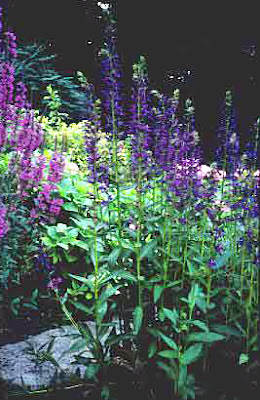
Since we finally had some rain and it's cooled down, I'm feeling hopeful that fall really is a good time for planting. A quick run up to two local nurseries (actual nurseries, not just the garden centers at the big box stores) found me nabbing some good additions for my fall garden. A lobelia, set aside for a butterfly-gardening client who never showed up, caught my eye. These plants had beautiful large blue spikes, were being visited by carpenter bees and butterflies, were flowering in small pots and were labeled Lobelia x speciosa 'Fan Blue.' In spite of not really having appropriately moist soil anywhere, I thought I'd try them. They were half-price, anyway. I also picked up some selections of one of our native asters, Aster novae-belgiae (New York Aster), a pot of society garlic ( Tulbaghia violacea ), some Viola, and a couple of pots of Spanish lavender, which flowered profusely in one of my containers this summer, and was heavily visited by bees. A...

Hummingbirds are everywhere

Image
We've had fun watching the hummingbirds whizzing around the garden lately. Right now, it seems that we have five. An adult male, 3 females, and a juvenile male. The adult male has just arrived, probably passing through on his way south, but the others have been here for a while. The females chase each other around, but fairly companionably, and they seem to be friendly with the juvenile male. Yesterday, it almost looked like one of the females was the 'mom' and the juvenile male (he only has a few red feathers on his throat) was wanting her to feed him. We have two feeders near the porch, where we eat during nice weather (basically April to October), with an additional feeder on the other side of the house. But there are also the nectar-rich flowers of the Salvias ( S. guaranitica and S. coccinea ) and the coral honeysuckle ( Lonicera sempervirens ) and the Buddleja flowers for nectar. There are lots of insects, too, in our garden. My gardening partner has been bu...

Hummingbird visits

Image
In summer, hummingbirds visit the feeders and flowers in the garden. Coral honeysuckle and Salvia coccinea are favorites; each coral honeysuckle flower seems to produce nectar for a number of days, at least they're visited frequently. A female hummingbird investigated the Bolivian begonia in the hanging basket outside my study window this morning. She kept looking for the nectar in the flowers; adapted for hummingbird pollination, this begonia is one of the Andean species that relies on deception, not nectar to attract hummingbirds. Check out this link for some interesting information on hummingbirds. http://nationalzoo.si.edu/conservationandscience/migratorybirds/webcam/hummingbirds.cfm