Posts

Showing posts with the label growing pitcher plants

An expanded sedum bed

Image
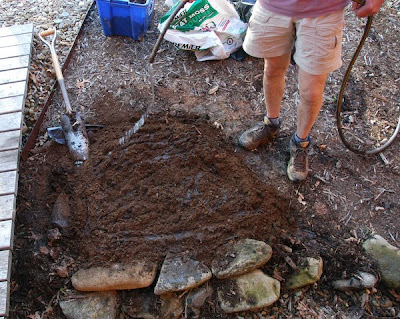
Potted carnivorous plants The small bog near our mountain house (with various pitcher plants and venus fly traps) didn't get enough sun to do well, so we converted it to sedums today. The carnivorous plants were transplanted to a tall glazed ceramic pot and the peat was excavated and stockpiled for other projects. My gardening companion reworked the bed, fishing out the plastic underlying the bog, and improved the drainage. Expanded sedum bed I transplanted lots of offshoots from the existing sedum bed (on the left) and with an addition of a large purple Madrona sedum in the center,  I'm hopeful that it will thrive.

Sedums and pitcher plants

Image
Our small sedum planting and pitcher plant bog are doing well. They reflect our urge to plant and transform mulch to green, even if our mountain space is focused on rejuvenation and we look into a forest towards the back. These plants seem to be thriving with intermittent summer rain (so definitely they're low-maintenance so far). I'm going to submit a landscape plan for the front getting ready for fall planting (it's required because of the historic district location). Uh-oh. My gardening companion admired some exuberant perennial plantings this morning in the flower garden at Biltmore Estate (Joe-Pye, Rudbeckia lacianata, a beautiful rose-pink Monarda didyma selection, pink Asclepias , along with a deep pink butterfly bush, and many other things, and said 'could our front yard look like that?' Hmmm, I'm not sure that we're willing to apply the water to make that happen but I can create low-water use perennial beds, for sure.

Creating a bog garden

Image
We really hadn't planned on a small bog garden, but happened on a display of carnivorous plants at a local plant festival. The keen young proprietor had many of our native pitcher plants, sundews and some Venus fly traps, along with some Australian insectivorous species. Most had been propagated by tissue culture, he said, and my gardening companion was entranced (he knows all about our native bog plants from an ecological point of view). He set to work digging a hole. Native bogs and savannah habitats are a wonderful aspect of the Southeastern U.S. When we lived in SE Georgia, the few remaining bogs were (and are) meccas for plant lovers. Here in South Carolina, we have the same pine savannah bogs, but also mountain cataract bogs, supporting a range of rare species. Once widespread, coastal plain pitcher plant bogs have declined because of drainage, development, agriculture, etc. Wetland protection has helped some, but bogs are still rare and threatened here in the U.S., as w...